You know this feeling.
You're sitting cross-legged in a family's living room. A toddler is climbing on you. The parent is watching. And you're scrolling through EICS trying to remember what documentation is required for a 6-month review while downloading files to email to the family.
You didn't go into Early Intervention to fight your laptop. You went in to help kids and families.
AI in EI puts the clinical knowledge you need in your pocket — organized the way your brain actually works during a session, not the way a bureaucracy organized a database.
Two tools in one app
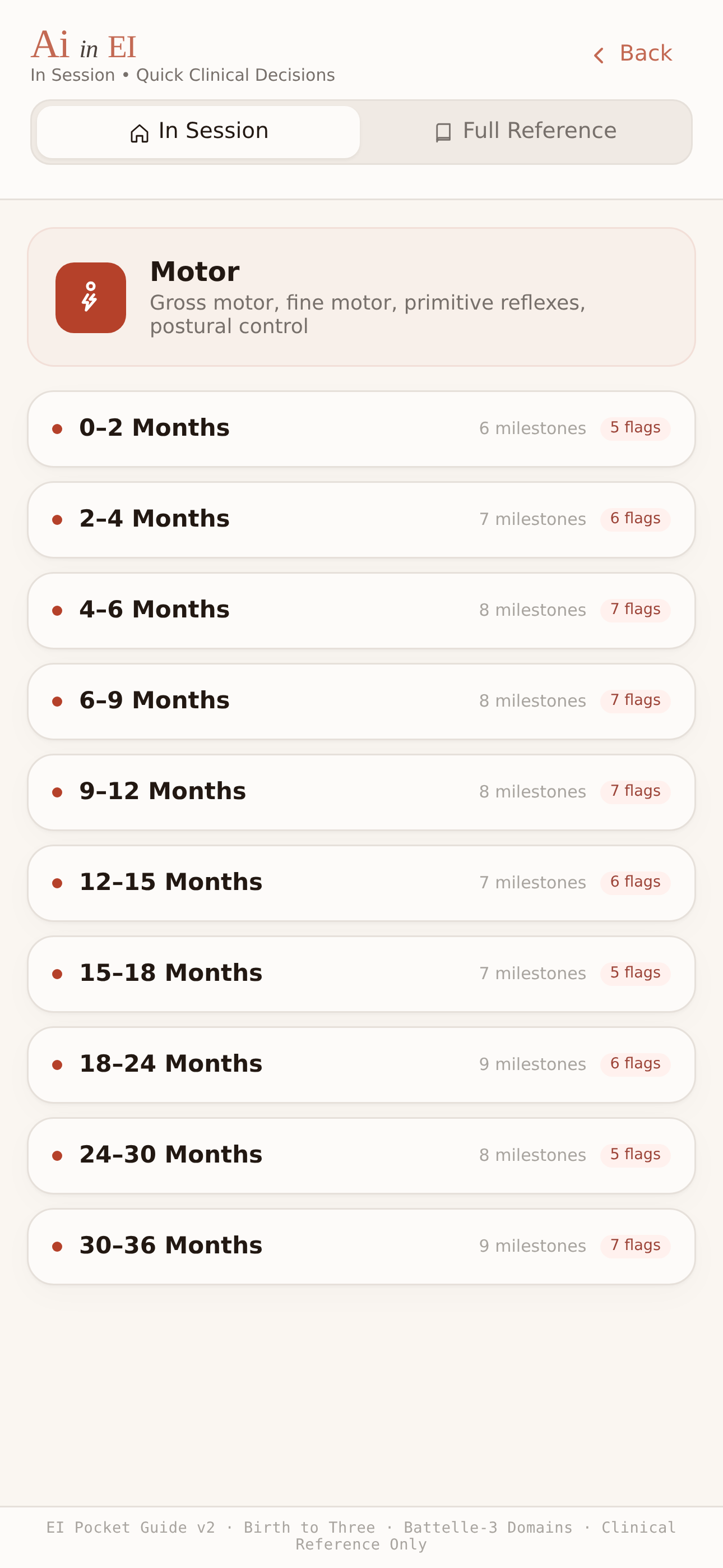
In Session Mode
Big fonts. Fast decisions. Tap a domain, see what matters right now. Quick scan checklists, clinical if/then decisions, one parent script. Designed for the living room floor with a toddler on your lap.
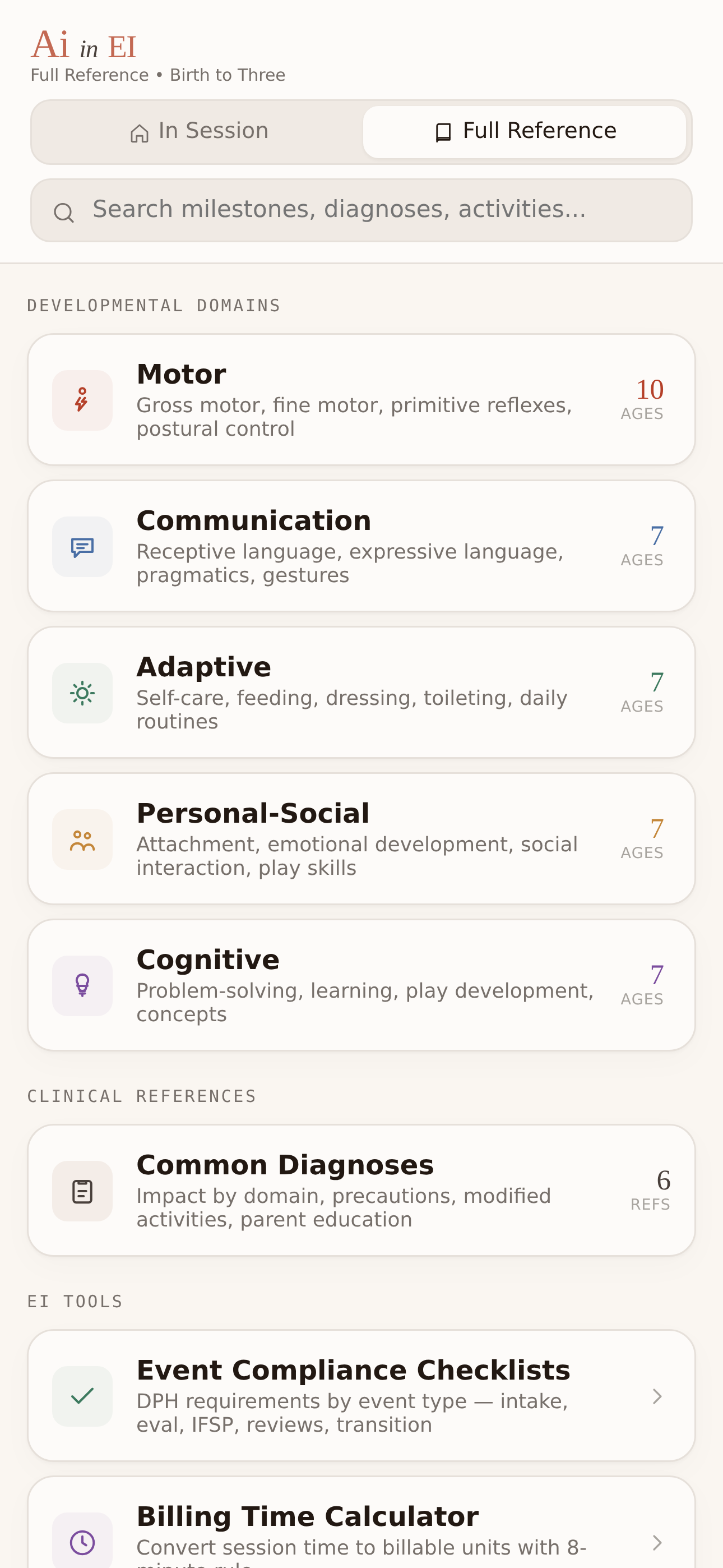
Full Reference Mode
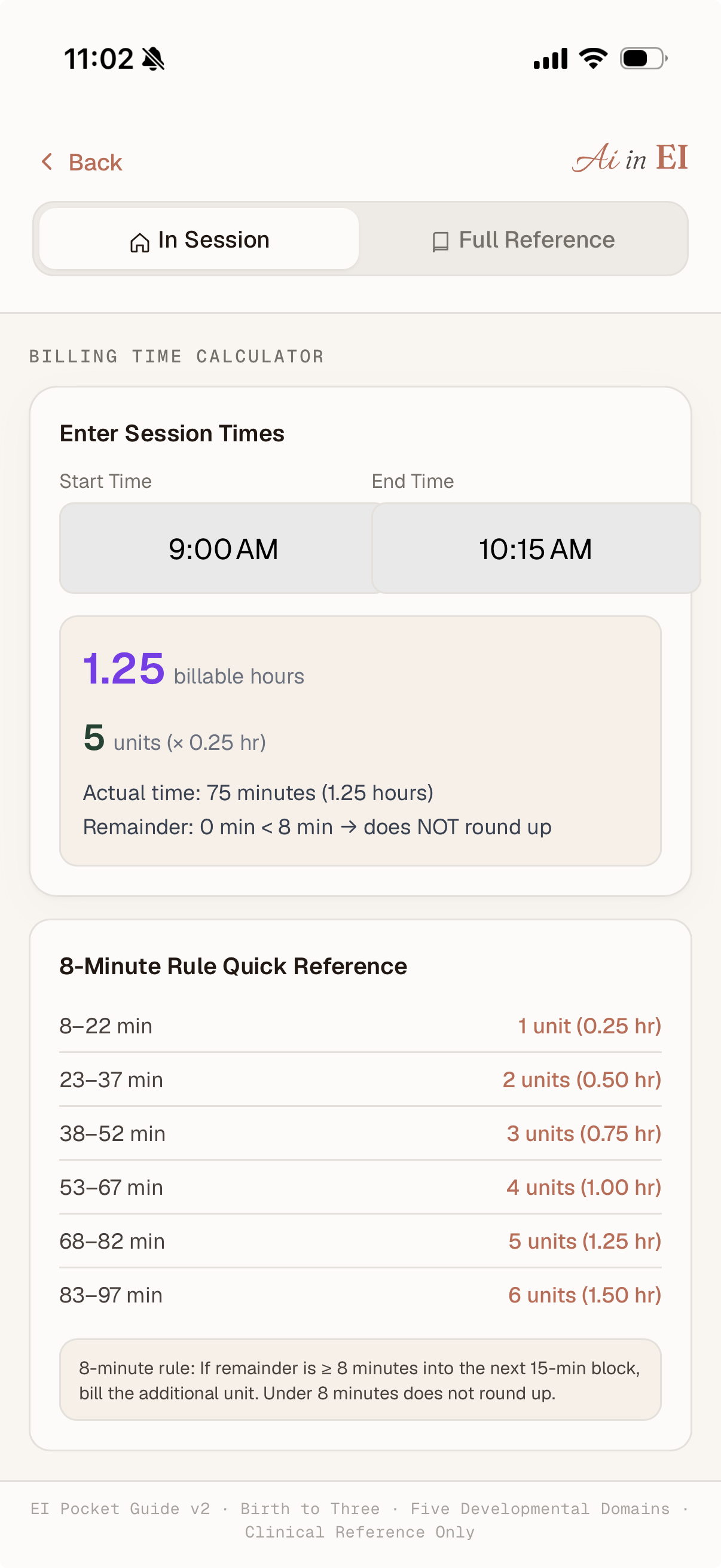
The deep library. Complete milestones across all domains, every activity with full details, speech sounds, feeding progression, primitive reflexes, diagnoses, compliance checklists, and tools. For prepping, studying, and learning.
Built by a clinician, not a corporation.
I'm an OT working in Early Intervention in Massachusetts. I built AI in EI because I was tired of fighting my laptop in living rooms — scrolling through dense reference materials while a parent watched and a toddler pulled at my screen.
I wanted a tool that works the way my brain works during a session: what am I seeing, what does it mean, what do I do about it, and what do I tell the parent. That's what the Field Guide does.
And I wanted a reference I could trust — one built on the actual DPH Operational Standards, not someone's best guess at what compliance requires. That's what the checklists do.
This isn't a generic milestone app for parents. It's a clinical tool built for the specific reality of EI work in Massachusetts.
— Brian Harold, MOT, OTR/L